
The Greatest Teacher
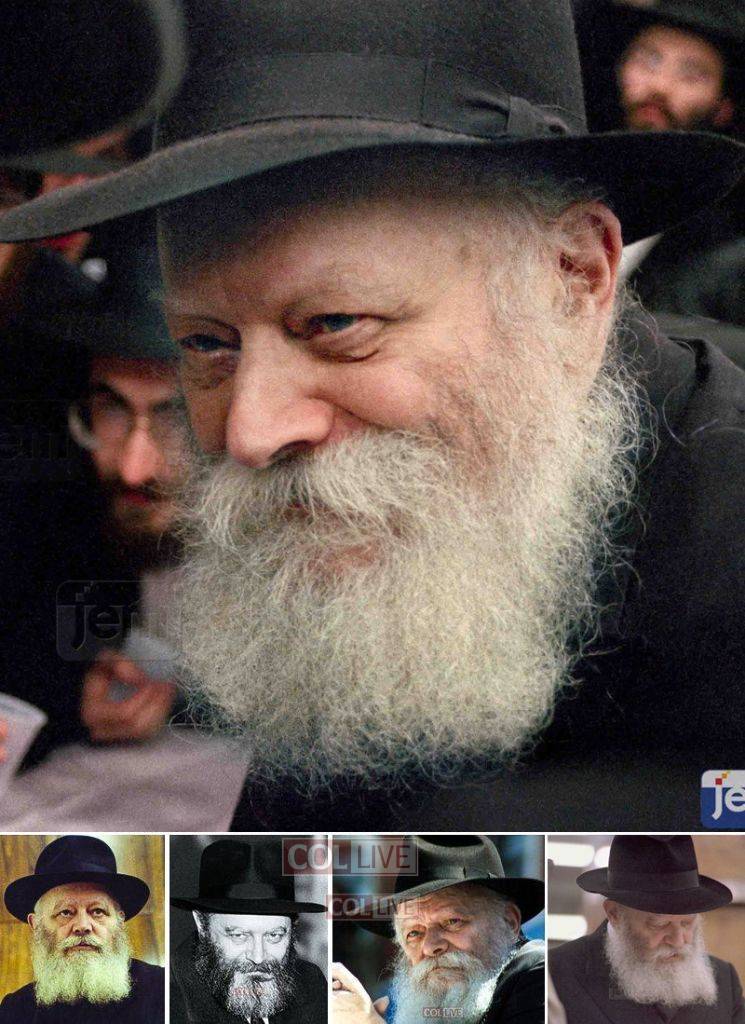
This Friday, “Mitzvah Tanks” will roll through the streets and matzah for Passover, holiday of miracles, will be distributed in honor of Yud-Alef (11) Nissan, birthday of the Lubavitcher Rebbe, Menachem Mendel Schneerson, of blessed memory. Born 122 years ago in Ukraine, the Rebbe saw quite a few miracles of his own – escape from two World Wars and the Communist regime; leadership role in America by turning Chabad into a global phenomenon. The Avner Institute presents a series of tender remembrances by Mrs. Raizel Goldberg of her grandfather, the Rebbe’s childhood teacher and a devoted Chassid, as well as the tremendous honor accorded to each other. With special thanks to the Cunin and Barash families.
Dedicated in memory of loving memory of Hadassah Lebovic A”h
Respecting his Childhood Teacher
Raizel Goldberg relates:
My grandfather, Shneur Zalman Vilenkin, was from Dnepropetrovsk, which
in his day was called Yekaterinoslav. This was the place where the Rebbe’s
family also lived at the time. The Rebbe was just a boy then, for this was in
the early 1900s and he would come, along with his two brothers, to my grandfather’s house to learn.
My mother remembers that these three boys always arrived very well-dressed,
and that they were very clean, very neat, and very polite. My grandfather would
learn with them for the allotted time, and then they would leave. How long
this went on, I don’t know.
One time, when the Rebbe was already a young man, he came over and asked
for my grandfather. My mother had answered the door and informed him that my grandfather wasn’t available.
The Rebbe told my mother, “I just came to return a book that I borrowed. I want to make sure that he gets it.”
My mother took it and thanked him.
“Put Me on my Feet”
My grandfather often told us about the Rebbe’s wedding celebration which took place in 1928, in Yekaterinoslav. Although the Rebbe got married in Warsaw, his own parents were absent because they were denied permission to leave Russia. Therefore, they arranged a second celebration in their home. My grandfather was there, and he danced the night away and even danced on the table.
After the war, our family, my grandfather included, left Europe and eventually moved to New York. And when we got here, my grandfather wanted to meet with the Rebbe. This was probably in 1955, though I am not sure of the exact date.
When he entered the Rebbe’s office, my grandfather naturally wanted to do the respectful thing and stand, but the Rebbe insisted that he sit. My grandfather, however, continued to stand.
The Rebbe said, “Many years ago, you and I sat across from each other on a table; we can sit across from each other at a table again.”
That convinced my grandfather, and he sat down.
The Rebbe simply would not allow my grandfather to stand in his presence, and
he later told one of my uncles that my grandfather hut mir avek geshtelt auf
di fees–put me on my feet.
Feeling for Others
Although my grandfather lived on Lincoln Place, which is close to Chabad headquarters, he rarely attended the farbrengens at 770 Eastern Parkway. Why? For one thing, because it was very hard for him to walk, but also because of what would happen when he got there.
He would come to the door of 770 with the help of one of my uncles, and as soon as he entered, the Rebbe would rise. And the Rebbe would remain standing until my grandfather sat down.
Of course, when the Rebbe stood up, so did everyone else. Consequently, the entire group of people assembled there stood for a long time, because it took my grandfather a long time to make it to his seat. Also, whenever he had to leave, the Rebbe would again stand up, and so would everyone else. And the whole thing would repeat itself.
Therefore, my grandfather, feeling bad about making all these people stand while he came and went, would not go often, in order not to inconvenience the Rebbe and his Chassidim.
Tender Care
In 1963 (5723) my grandfather got sick. It was Lag BaOmer, which that year happened to fall on a Sunday. We notified the Rebbe that my grandfather was not well and had to be hospitalized.
As soon as he heard the news, the Rebbe phoned my aunt. “Do you mind if I send a nurse to the hospital? I want him to have 24-hour care, and I will pay for it. Also, I would like to send a certain specialist to see him.”
Of course, my aunt agreed and expressed the family’s gratitude.
At the time I was young, a student at a school in New York, and I remember
coming to the hospital and hearing how the nurses were all abuzz because this
famous doctor came to see my grandfather at the Rebbe’s request.
Greatest Honor
When my grandfather passed away, it was Thursday, late at night. Friday
morning, we had the funeral (within 24 hours, as per Jewish law). The Rebbe participated in the funeral and came all the way to the cemetery, but he stayed at the gate, watching the burial from there. He stood there the whole time while the funeral was going on, and he left only when it was over.
Afterwards, we received a phone call with the Rebbe’s apology for not participating in the funeral. The Rebbe explained that whenever he went to the cemetery, he always visited the resting place of his father-in-law, the Previous Rebbe, which always required time for preparation. On this occasion, being so close to Shabbos, there was little time, so he could not enter.
During this phone call, the Rebbe made two requests:
He be allowed to pay the full amount for the burial plot. Since, according to Jewish law, the family should pay for this, the Rebbe wanted the family to pay only a token amount, like one dollar, while the Rebbe would pay the rest.
On the headstone should be written the words that my grandfather had been his teacher. The Rebbe obviously knew that his teacher would be accorded the greatest honor by the Chassidim if they knew this.
My uncle and my father decided on the exact wording; they showed it to the Rebbe, and he approved. He also offered to pay one-third of the cost of the headstone—and the headstone was quite large.
That is how much respect the Rebbe had for my grandfather, his childhood teacher. Even though it was a long time ago, he never forgot, and he showed his respect and gratitude in so very many ways to the man who, as he put it, hut mir avek geshtelt auf di fees–put me on my feet.
To receive to your inbox email: Rebbebook@gmail.com